- 14/05/2026
Salt Awareness Week
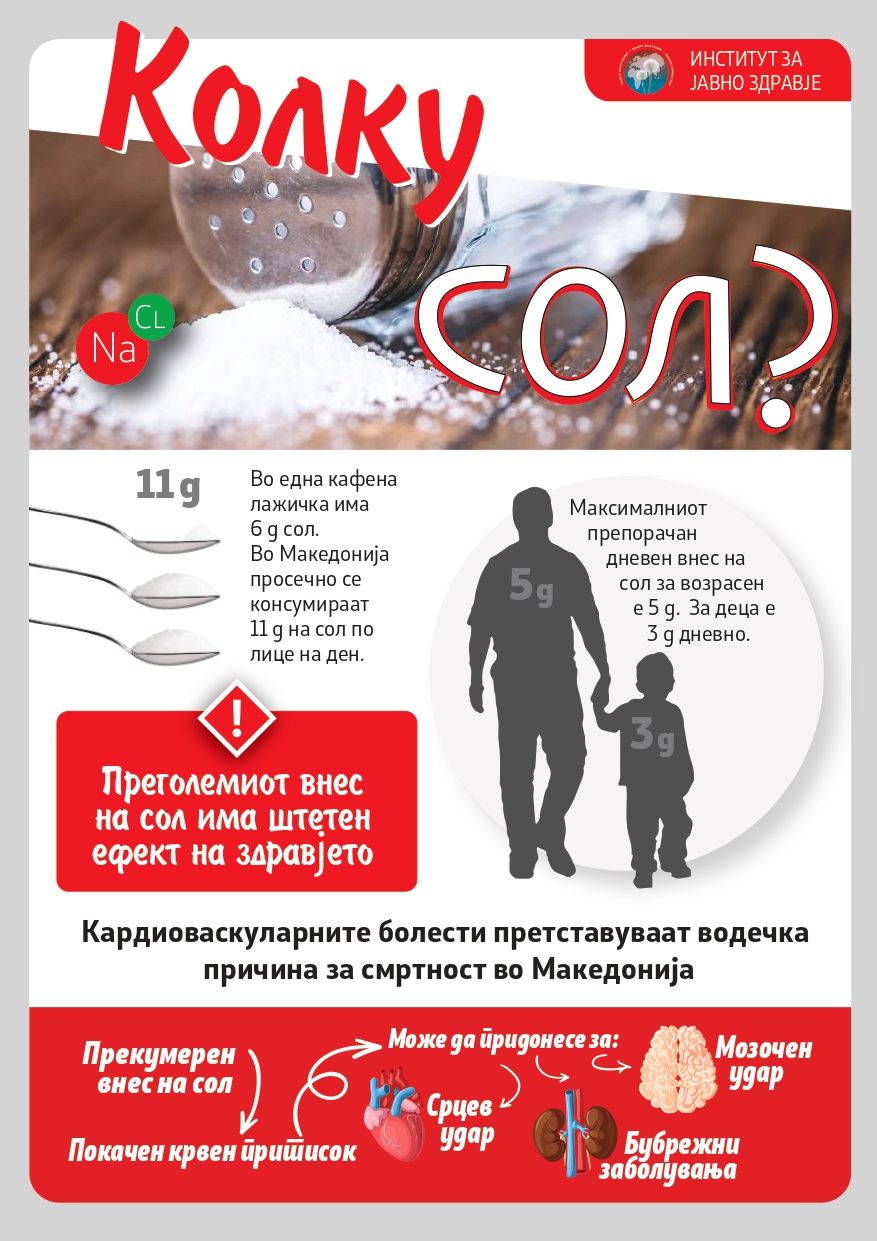
Excessive salt intake is a significant risk factor for high blood pressure, cerebrovascular diseases, and kidney diseases. The World Health Organization recommends that daily salt intake for adults should be less than 5 grams.
According to estimates by the Institute of Public Health, the population in Macedonia consumes an average of around 11 g of salt per day, which is more than double the recommended daily intake.
Additionally, an analysis of 221 food products showed that the sodium content in the majority of products exceeds the recommended values set by the World Health Organization.
The highest salt content was found in:
· instant soups and noodles;
· processed meat and cured meat products;
· salty snacks;
· dairy products;
· bread and cereal products.
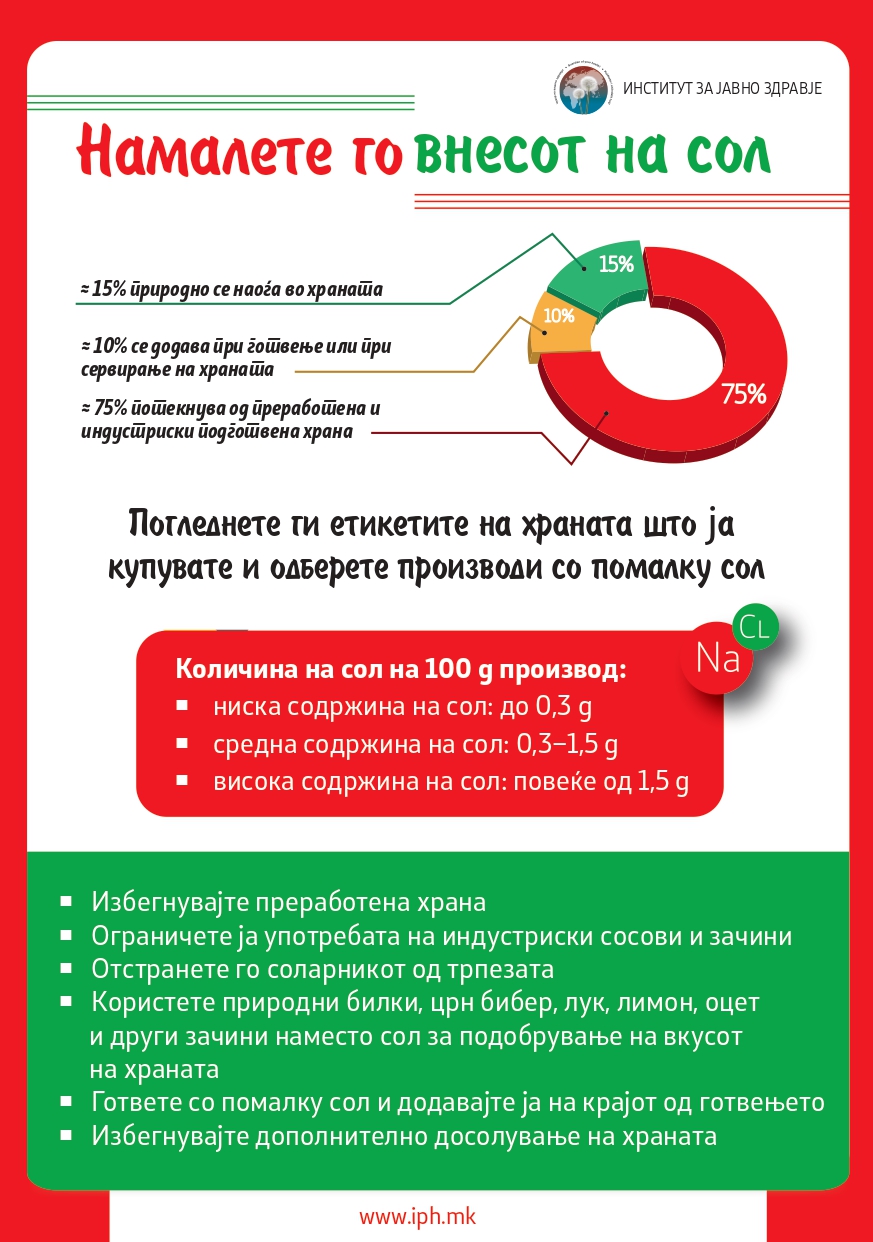
Most of the salt consumed comes from highly processed foods, which is why it is especially important for consumers to carefully read labels and choose products with lower salt content.
The Institute of Public Health recommends:
· limiting highly processed foods;
· gradually reducing the use of salt when preparing food;
· avoiding additional salting of meals;
· using natural herbs and spices as an alternative to salt;
· choosing products with lower salt content.
Reducing salt intake is one of the most effective and cost-efficient measures for improving public health and reducing the risk of chronic non-communicable diseases.